Notes on AI visibility, discovery and brand trust.
Field-tested perspectives on how brands appear inside AI answers — what shifts behaviour, what builds trust, and what to actually do about it.

Meet Alys: An AI Host for Events, Exhibitions, Showrooms and Museums
Meet Alys, an interactive AI character built to host events, guide exhibitions, explain products in showrooms and bring museum stories to life.
Your watch collection already says more about you than you think
Wristmark is a platform for watch collectors to understand and share their collection identity. Instead of just listing watches, it analyzes your collection and turns it into a personality profile with archetypes, percentages, and a visual breakdown. The idea came from a simple observation: collectors naturally develop consistent taste, but no platform captures or explains it. Wristmark makes that identity visible, then uses it to help people discover and connect with other collectors who think similarly. It starts with identity, but the goal is community built around taste, not price.
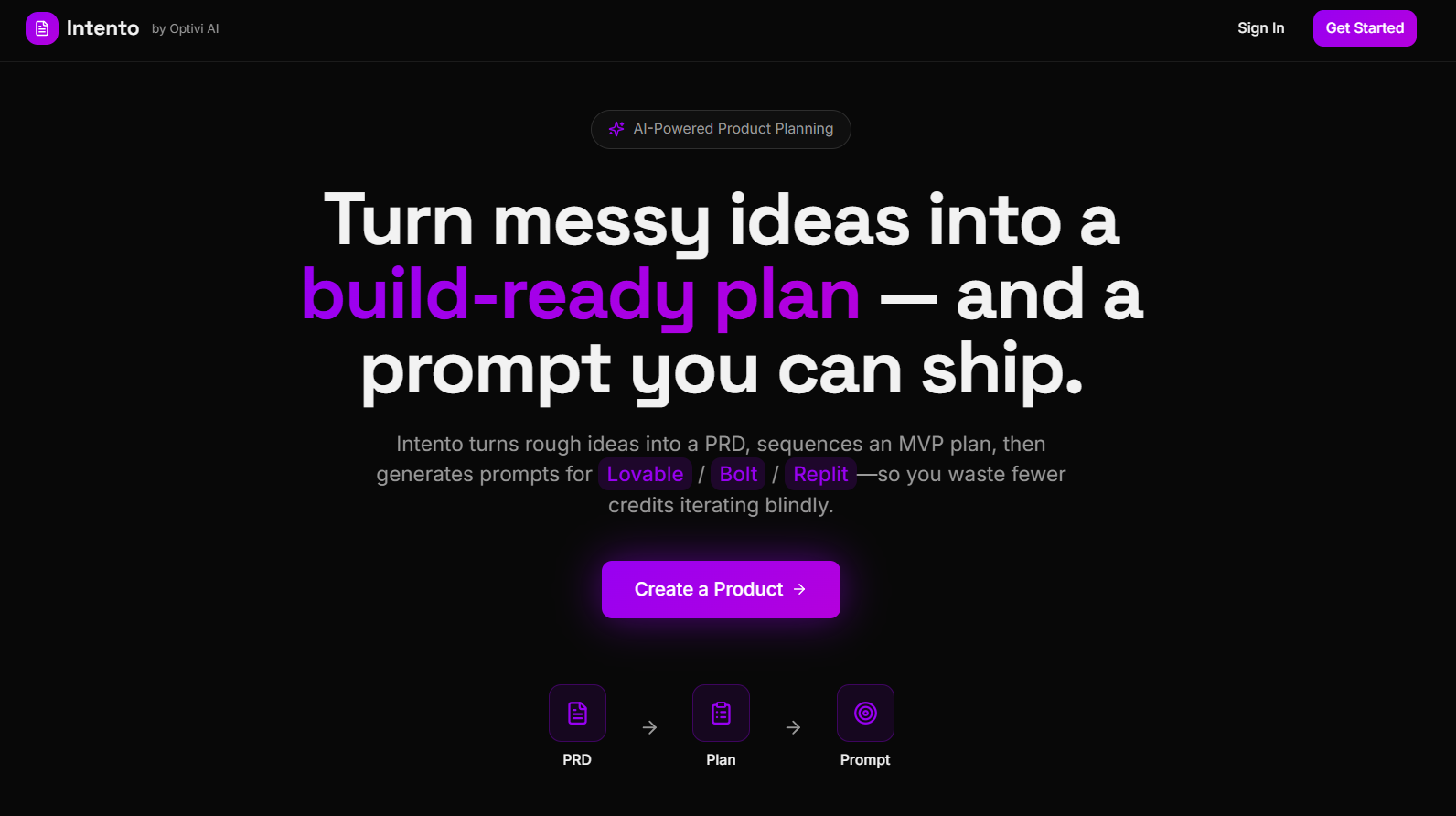
Optivi AI Launches Intento: A New Product Tool for Intent Before Building
As AI tools make building faster and cheaper, many teams are discovering a new bottleneck: clarity before execution. Speed without intent leads to rework, prompt thrashing, and building the wrong thing faster. Intento is Optivi AI’s new product experiment focused on a simple principle: intent before building. It helps founders, product managers, and builders turn early ideas into clear, decision-ready plans and build-ready prompts — before execution begins. Rather than replacing project management or delivery tools, Intento sits upstream, supporting better product thinking in an AI-accelerated workflow.
Where Can I Find AI-Powered SEO Auditing Services in Singapore? A 2026 Guide for Brands Ready to Engineer Visibility
As we kick off 2026 in Singapore's fast-paced digital hub, AI is no longer a nice-to-have, it's the engine driving search discovery. With Google's AI Overviews now handling over 45% of queries without clicks and ChatGPT evolving into a primary research tool, brands face a stark reality: traditional SEO audits miss the mark on GenAI readiness. Local businesses are seeing 25-35% traffic erosion yearly, per updated SparkToro and GWI reports, as users in Orchard or Jurong prefer instant AI answers over site visits. That's where AI-powered SEO auditing services come in, scanning for prompt coverage, sentiment risks, and citation potential to keep you in the shortlist.
Will GEO Completely Replace SEO? Navigating the Future of AI SEO Strategies in 2025
In the ever-shifting landscape of digital marketing, one question keeps marketers up at night: will Generative Engine Optimization (GEO) fully eclipse traditional Search Engine Optimization (SEO)? As AI-powered search tools like ChatGPT and Google's AI Overviews dominate user queries, the rise of AI SEO practices has forced us to rethink how brands capture attention. With search behaviors evolving faster than ever, understanding whether GEO will replace SEO isn't just academic, it's a survival imperative for businesses aiming to stay visible in an AI-first world.
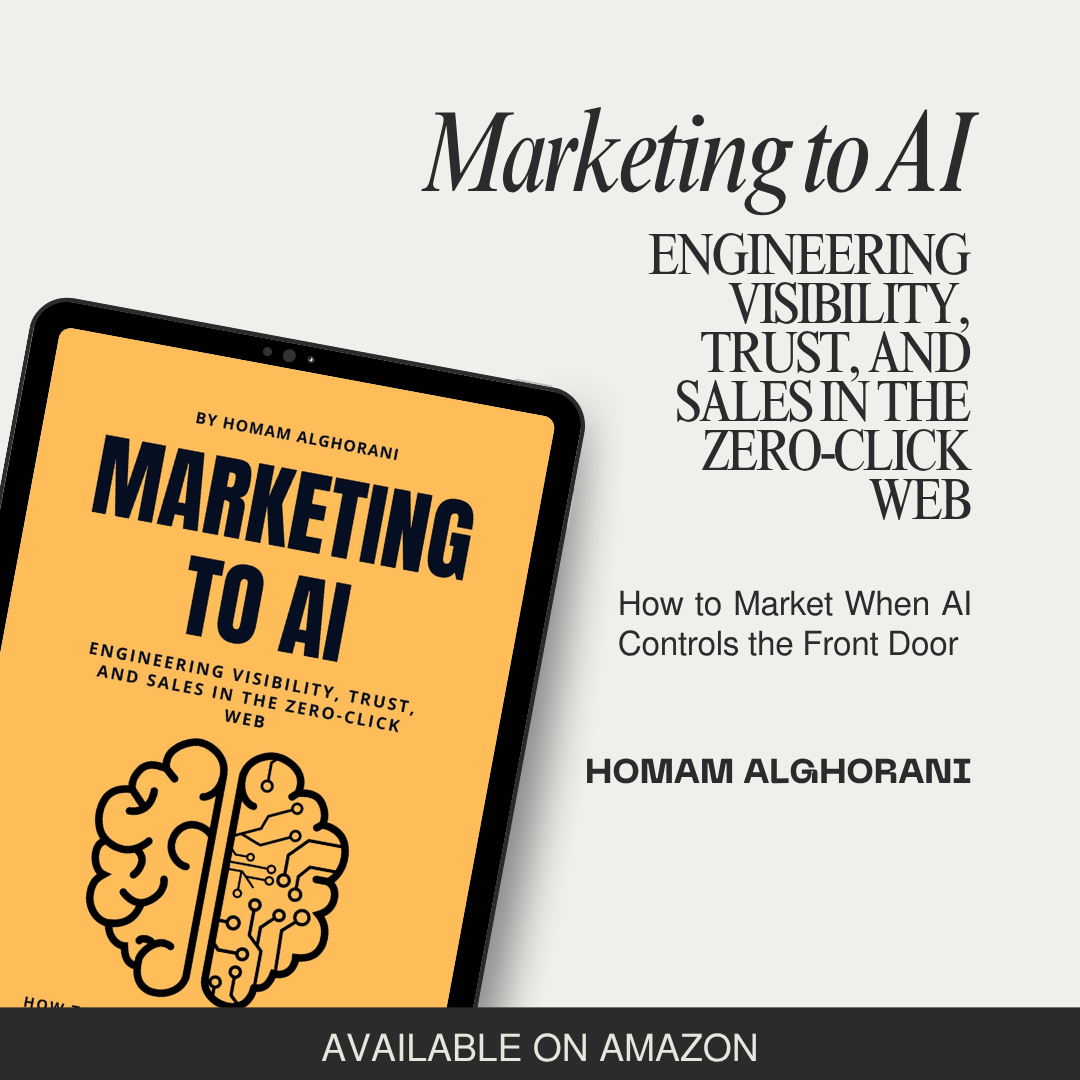
The Future Has No Clicks: Why “Marketing to AI” Is the New Marketing to Humans, Best AI SEO Book
The web you knew is gone. Search engines no longer send traffic — they send answers. ChatGPT, Gemini, and Perplexity have become the new gatekeepers of discovery, shaping what people see, buy, and believe.
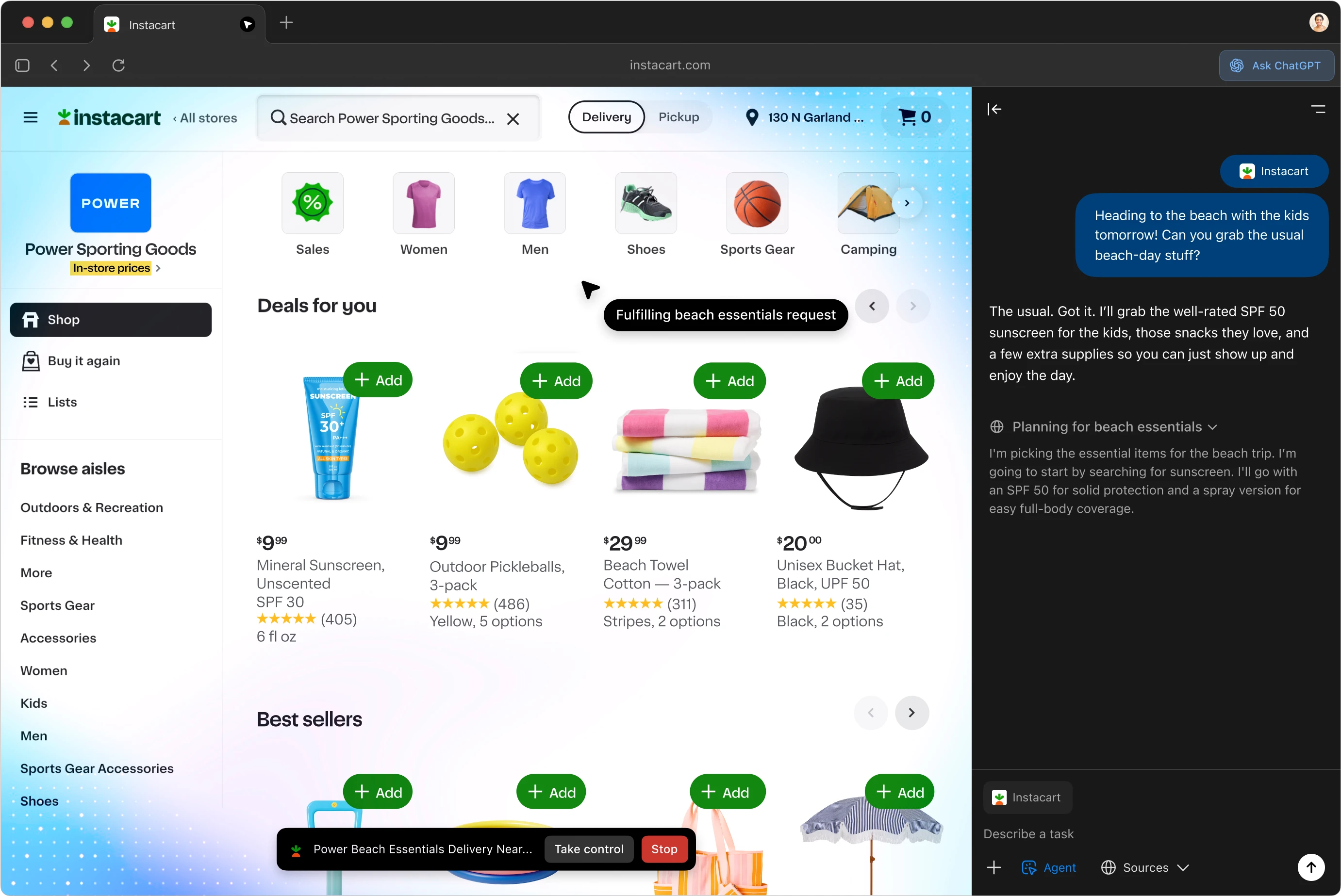
ChatGPT Atlas: The Dawn of the Agentic Browser Era
When OpenAI unveiled ChatGPT Atlas, it didn’t just launch another browser — it launched a new way of thinking about the internet. Atlas doesn’t want to replace Chrome; it wants to make the web itself intelligent. Built on Chromium, Atlas feels familiar at first. You can install extensions, manage tabs, and sync bookmarks. But within minutes, you realise something fundamental has shifted. The search bar doesn’t just ask what you want to look for; it asks what you want to do. Instead of sending you to Google, it surfaces curated, contextual results directly inside ChatGPT. The browser has become a co-pilot — a reasoning layer between you and the web.
How to Optimize Your Content for AI Agents: Ensuring Your Brand Is Recommended
In today's digital landscape, AI agents like search assistants and recommendation systems play a pivotal role in connecting users with brands. Optimizing your content for these AI systems is crucial to ensure your brand stands out and gets recommended. With platforms like Optivi AI leveraging advanced algorithms to deliver personalized results, businesses must adapt their content strategies to align with how AI agents process and prioritize information. This article explores actionable strategies to optimize your content for AI agents, helping your brand gain visibility and trust.
Brand Trust in the Age of AI Agents – How to avoid misrepresentation in AI answers.
AI agents can enhance brand trust by ensuring transparency, regular auditing of responses, and clear disclaimers to prevent misrepresentation, fostering reliability in an era where accuracy is paramount. Companies must prioritize human oversight and data integrity to maintain customer confidence in AI-generated answers.
The Rise of Agent-Mediated Discovery: How GenAI is Reshaping Marketing Funnels
In today's digital landscape, the way consumers find and engage with brands has evolved dramatically. Gone are the days when a simple Google search dominated the path to purchase. Enter agent-mediated discovery, a concept where AI agents act as intermediaries, guiding users through information and decisions with unprecedented efficiency. Powered by generative AI (GenAI), this shift is fundamentally altering marketing funnels, making them more dynamic, personalized, and sometimes invisible to traditional strategies. As brands scramble to adapt, tools like Optivi AI are emerging as essential allies in maintaining visibility and relevance.
From GEO to ACO: Measuring Brand Performance in the Era of Agentic Commerce
The digital marketing world has always been a game of adaptation. Remember when SEO ruled, demanding keyword-stuffed pages to climb search rankings? Then came generative AI, flipping the script with instant answers that bypassed clicks altogether. Enter Generative Engine Optimization (GEO), the strategy brands adopted to ensure their content influences those AI summaries and recommendations. But as AI evolves from mere responder to active agent—handling bookings, purchases, and decisions on our behalf—we're witnessing a deeper shift. This is the dawn of Agentic Commerce Optimization (ACO), where measuring brand performance means tracking not just visibility in answers, but influence over actions like direct sales in chat interfaces.
The End of AdTech as We Know It: Why AI Intermediaries Are Stealing the Show from Ad Middlemen
Picture this: It's 2025, and you're a marketer who's spent years perfecting your Google Ads campaigns, bidding on keywords like they're rare Pokémon cards. Suddenly, your traffic plummets because nobody's clicking anymore. They're just... asking. Asking AI for the best SUV under 300k, or the perfect honeymoon spot in Southeast Asia, and getting instant answers, curated lists, even booking confirmations – all without ever landing on your site. Welcome to the twilight of traditional AdTech, where AI intermediaries are gatecrashing the party and kicking out the old ad brokers. It's hilarious in a "laugh or cry" kind of way – like watching a dinosaur try to swipe right on Tinder.
September Product Updates — Built With Our Clients
This month’s releases focus on speed, clarity, collaboration — and now, community. Thanks to thoughtful feedback from customers, we’ve shipped four upgrades that make onboarding and insight-to-action faster.
From Search to GEO: The Next Marketing Revolution – Why Visibility Isn’t Luck, It’s Engineered
In the digital age, search has long been the gateway to the internet—a portal through which users discover products, services, and ideas. But that gateway is evolving rapidly. Users are gravitating toward instant, AI-powered answers, favoring convenience over clicking through endless links. This shift marks the dawn of a new era: Generative Engine Optimization (GEO). At Optivi AI, we’re at the forefront of this revolution, helping brands track, analyze, and optimize their visibility on GenAI platforms. Because in today’s world, visibility isn’t a stroke of luck—it’s something you engineer.
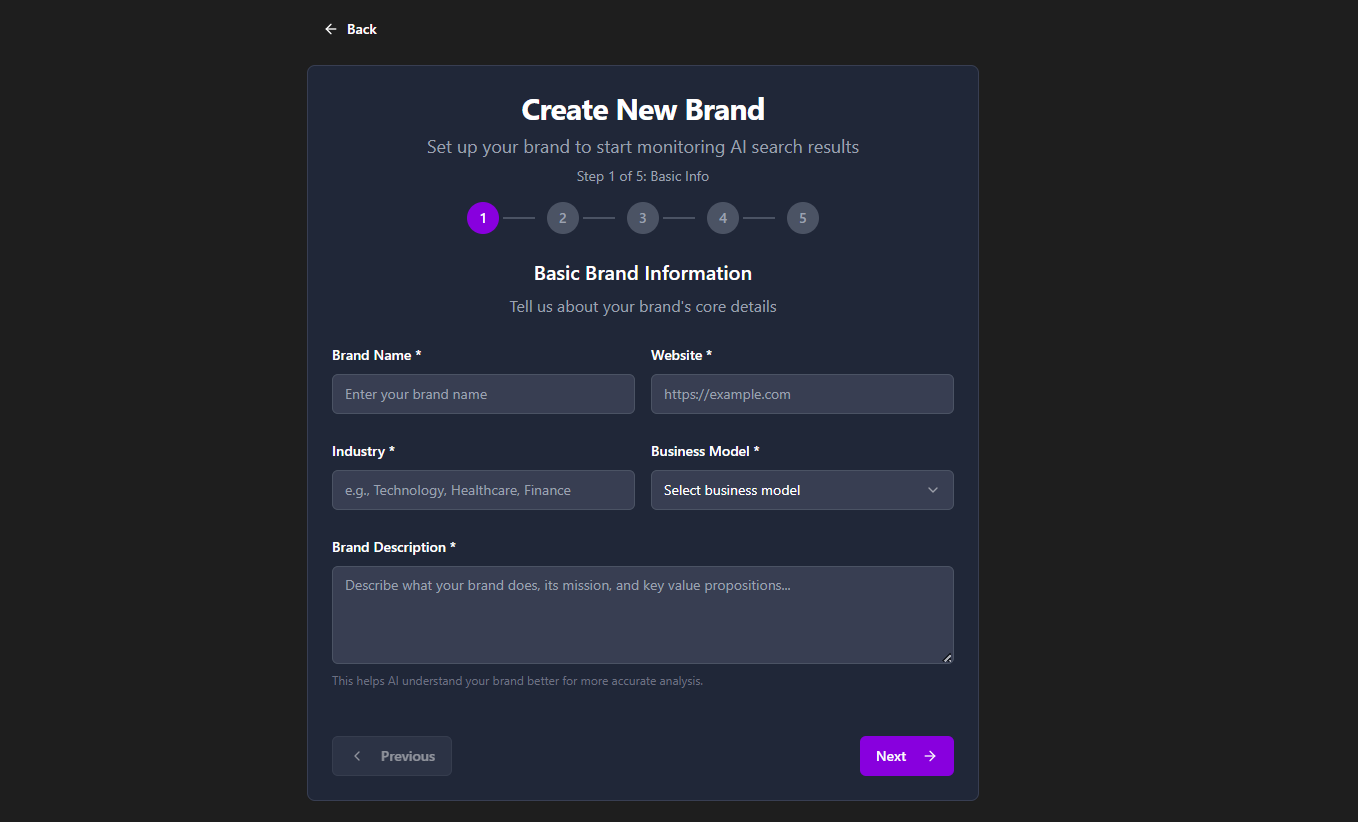
Listening to Our Clients: Introducing the Multi-Step Brand Creation Wizard
At Optivi AI, we take pride in building with our clients, not just for them. One of the most consistent pieces of feedback we heard was that the brand setup process, while powerful, could feel overwhelming in a single long form. So we redesigned it — and today we’re excited to introduce the Multi-Step Brand Creation Wizard.
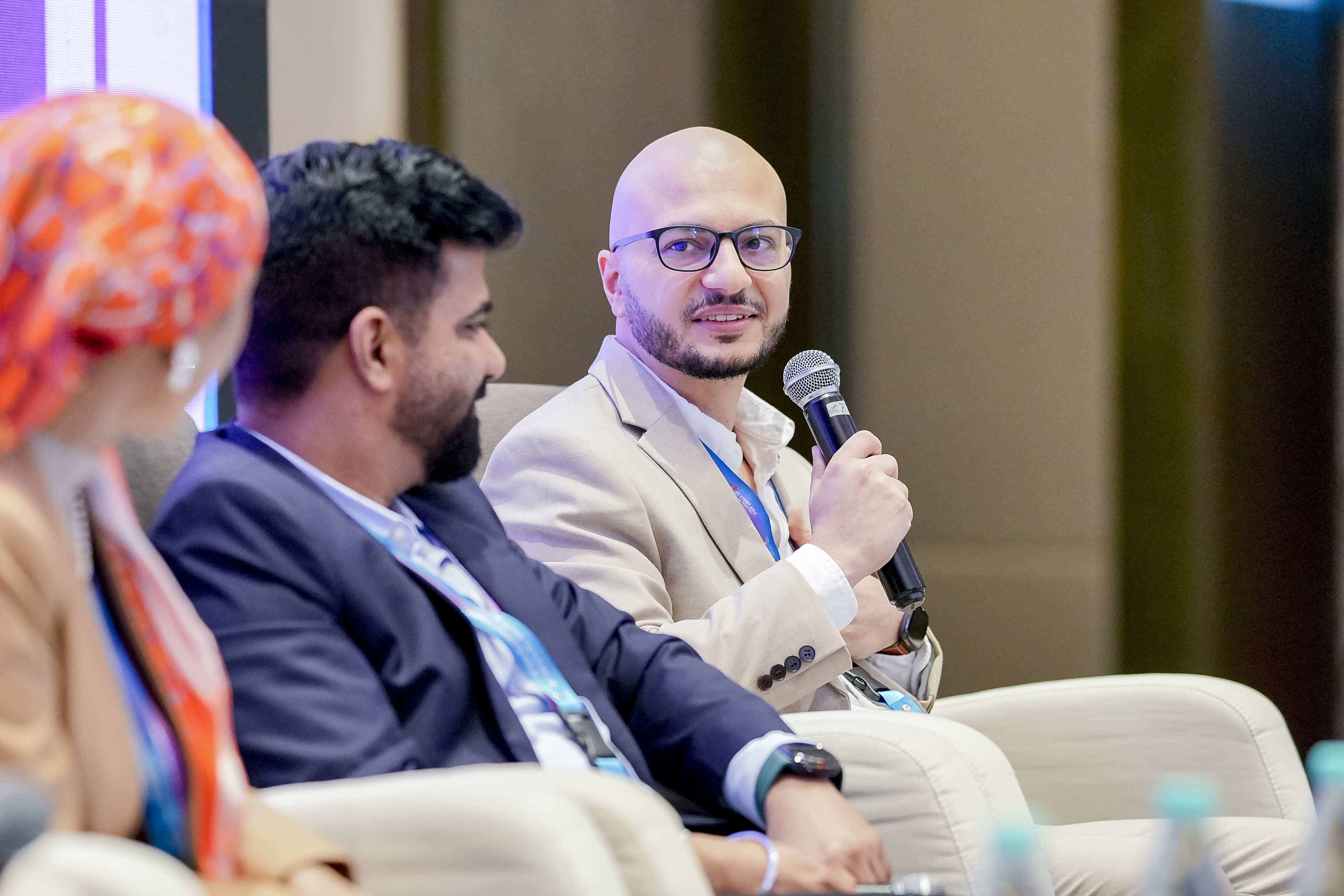
Beyond Experience: Why Customer Engagement Is the New Strategic Imperative
At the Customer Success 2025 & Beyond Summit in Kuala Lumpur, Optivi AI Founder & CEO Homam Alghorani joined the closing panel of Day 1: “Beyond Experience – Why Customer Engagement Is the New Strategic Imperative.”
AI SEO in Singapore: How CMOs Can Stay Visible in the AI Era
In Singapore, digital discovery is changing faster than anywhere else in Southeast Asia. While traditional SEO still matters, AI SEO, also known as Generative Engine Optimisation (GEO), is quickly becoming essential. Customers are no longer scrolling through search results; they are asking ChatGPT, Google AI Overviews, Gemini, Perplexity, and Claude for direct answers. If your brand isn’t cited, you’re invisible. For CMOs, the risk isn’t just lost clicks, it’s lost attribution, weaker sentiment, and competitors owning the AI conversation. In this article, we’ll break down what AI SEO means for Singapore brands, why it matters now, and how you can build a strategy to stay visible in the zero-click future.
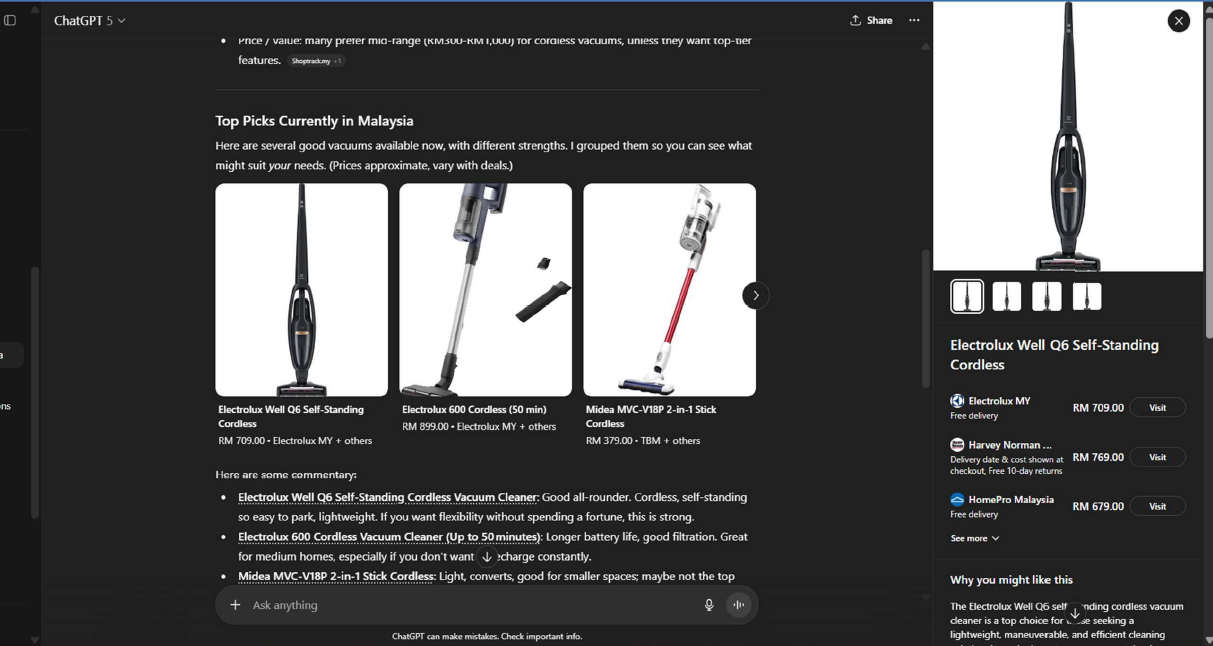
Will AI Gobble Up E-Commerce? My Wild Prediction for 2026 (And a Real-Life Vacuum Suck-Up Example)
Hey, it's Homam Alghorani here again, founder of Optivi AI, the tool that's got brands' backs in the generative AI jungle (formerly Morse AI, but we've leveled up). Last time, I spun this yarn about LLMs chomping on e-commerce like it's an all-you-can-eat buffet. But let's make it real. Just yesterday, I fired up ChatGPT with a casual prompt: "What's the best vacuum cleaner in Malaysia?" No frills, just me channeling my inner messy human who hates pet hair more than small talk.
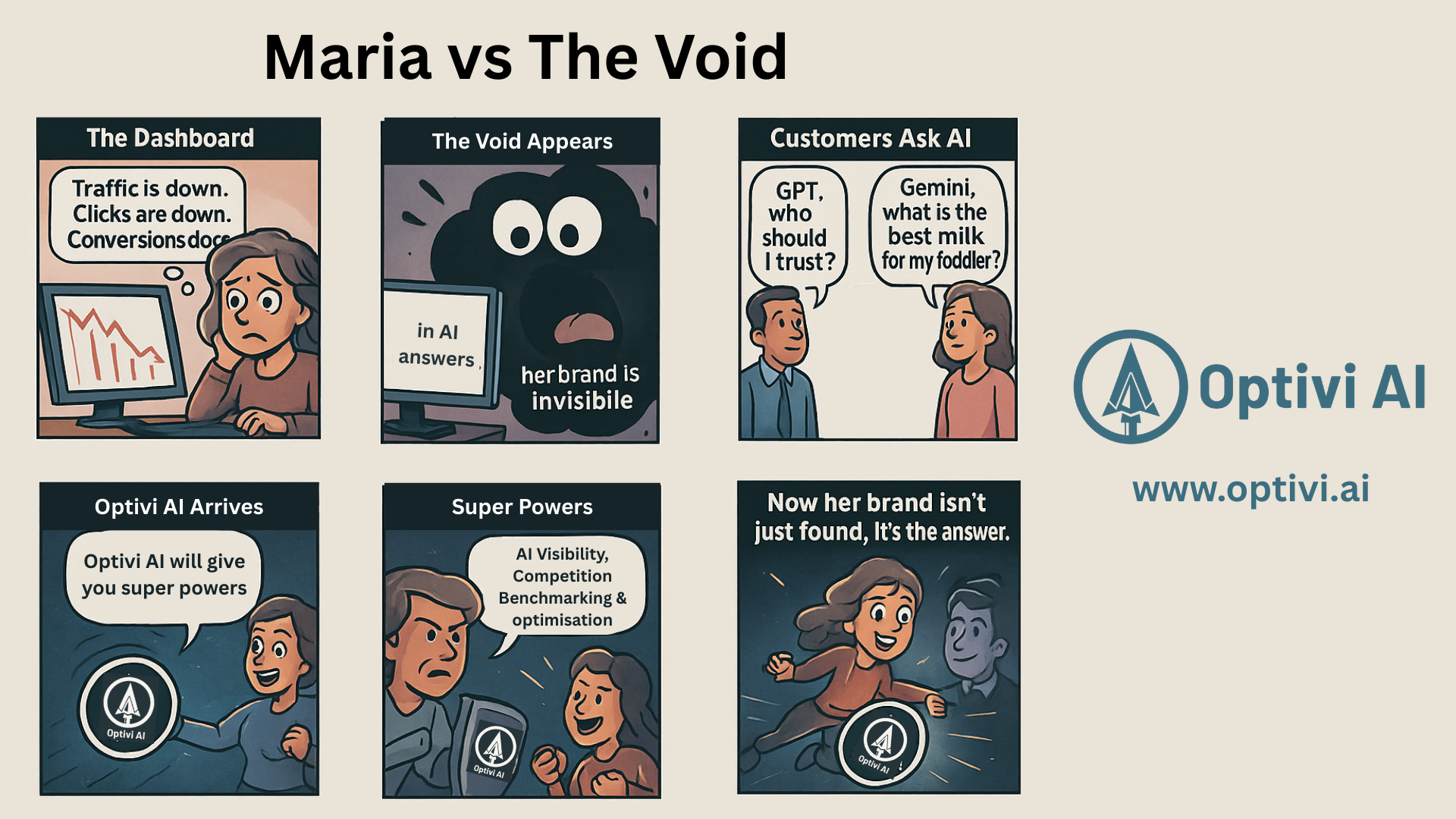
🚀 Maria vs The Void
In today’s AI-driven world, if your brand isn’t in the answer, it’s invisible. Traditional SEO and ads won’t protect you from the Void. That’s why we built Optivi AI — giving brands superpowers to: ✅ Track visibility in GenAI answers ✅ Benchmark against competitors ✅ Optimise presence to stay top-of-mind 👉 See how we help brands turn invisibility into impact: www.optivi.ai
From SEO Keywords to GEO Prompts: Translating Old Playbooks to New Systems
Remember when searching for something meant typing a few words into Google and scrolling through blue links? That was the game for brands. You'd optimize your site with the right keywords, hope for a top spot, and count on clicks to drive sales. It felt predictable, even if it took work. But these days, things have shifted. People don't always click anymore. They ask AI chatbots like ChatGPT or Gemini for quick answers, and the AI just spits them out. No site visit needed. This change is hitting brands hard, and it's forcing everyone to rethink how they show up online.
Zero-Click Futures: What Brands Need to Know as 60% of Queries Never Leave AI Chat
In today's digital landscape, search behavior is evolving faster than ever. With the rise of AI-powered tools like Google AI Overviews, ChatGPT, and Gemini, a staggering 58.5% of Google searches now end without a single click to an external site. This phenomenon, known as "zero-click searches," means users are getting answers directly within AI interfaces, never leaving the chat or search results page. For brands, this shift poses both challenges and opportunities. As an SEO and digital marketing expert, I'll break down what zero-click futures mean for your business and how to adapt to ensure your brand remains visible and competitive.
Mastering Optimisation & Recommendations: Elevating Your Brand in AI Responses
In the fast-evolving world of generative AI, simply being visible isn’t enough—brands need to lead AI responses with optimized content and actionable strategies. At Optivi AI, our Optimisation & Recommendations feature empowers marketing teams and agencies to boost citations, refine tone, and secure top rankings in AI-driven results. This post delves into how this layer works, its role in enhancing brand control, real-world impacts from our pilots, and a step-by-step guide to implement it effectively, all underscored by the urgency of the $168M SOM market by 2030.
AI Sentiment Analysis: Turning Insights into Optimisation for Better Brand Control
In the generative AI landscape, how your brand is described in AI responses can make or break consumer trust. At Optivi AI, our AI Sentiment & Context Analysis, combined with Optimisation & Recommendations, empowers marketing teams and agencies to track tone, understand context, and automate actions for stronger brand control. This post explores these features, the risks of AI misrepresentation, market trends underscoring the urgency, and practical optimization tips—including a simple guide to implementing recommendations.
Mastering the Brand Rank Index (BRI): Benchmarking Against Competitors in the AI Era
As generative AI reshapes search and discovery, knowing where your brand stands against competitors in AI-generated responses is crucial. At Optivi AI, our Brand Rank Index (BRI) empowers marketing teams and agencies to benchmark performance, track share of voice, and uncover opportunities in this new landscape. This post dives into BRI—how it's measured, why it surpasses traditional SEO tools, our key differentiators from competitors like Ahrefs and SEMRush, and strategies for agencies to leverage it for client success, with examples from markets like Southeast Asia (SEA) and India.
Unlocking Your Brand Visibility Score (BVS): How to Track and Boost AI Mentions
In the age of generative AI, where users get instant answers without clicking through to websites, brand visibility isn't just about ranking on search engines—it's about appearing in AI-generated responses. At Optivi AI, our Brand Visibility Score (BVS) is a core metric that helps marketing teams and agencies measure and enhance how often their brands are mentioned across GenAI platforms. This post takes a deep dive into what BVS is, how it's calculated, the real costs of poor visibility, anonymized examples from our pilots, and practical steps to improve your score using prompt engineering and context drivers.
The Rise of Generative Engine Optimization (GEO): Why Brands Need to Adapt Now
The internet's original gateway—search—is undergoing a profound transformation. People no longer want lists of links; they crave quick, contextual AI answers. This shift from traditional search engines to generative AI platforms like ChatGPT, Google AI Overviews, and Perplexity is redefining how consumers discover products, services, and information. For brands, this means the old rules of SEO are evolving into something new: Generative Engine Optimization (GEO). If you're not optimizing for AI visibility, your brand risks becoming invisible in the conversations that matter most.
Introducing AI Optimisation Consulting: Human Expertise for GenAI Visibility
At Optivi AI, we’ve always believed that visibility isn’t luck, it’s engineered. Our SaaS platform helps brands measure and optimise how they appear across ChatGPT, Gemini, Claude, Perplexity, and other GenAI platforms. But as adoption grows and AI answers increasingly replace traditional clicks, many brands have asked for something more: hands-on guidance, tailored strategies, and expert support.
AI Platform Citation Patterns: What Marketers Must Know About GenAI Discovery
The era of a one-size-fits-all content strategy is officially over. While search engine optimization (SEO) has long been the cornerstone of digital visibility, the rapid rise of generative AI has introduced a new, complex, and often bewildering landscape. AI-powered answer engines like ChatGPT, Perplexity, and Google's AI Overviews are not simply an extension of traditional search; they are fundamentally reshaping how information is discovered, synthesized, and presented. This shift has created what can only be described as a fragmented digital reality, where brands that were once highly visible in search results now find themselves invisible in AI-generated answers.
Exciting Updates from Optivi AI: Seamless Payments and a Special September Promo!
Hey everyone! 🚀 At Optivi AI, we're on a mission to help brands track, analyze, and optimize their visibility on GenAI platforms like never before. With search evolving from clicks to quick AI answers, brands are losing 20-30% of traffic year-over-year as GenAI replaces traditional site visits. That's why we launched our MVP this September 2025 – to give you control in this AI-driven world.
Sentiment Is the New SEO – Tracking Tone in AI Answers
In the age of generative AI (GenAI), the battle for brand visibility has shifted from traditional search engine results pages (SERPs) to instant, conversational AI responses. No longer is it enough to rank high in clicks; brands must now ensure they appear favorably in AI-generated answers that often resolve queries without a single click. This evolution, dubbed Generative Engine Optimization (GEO), places sentiment—or the tone in which your brand is portrayed—at the forefront of digital strategy. As AI platforms like ChatGPT, Grok, and Google Gemini become primary gateways for information, tracking and optimizing tone isn't just an add-on; it's the new SEO.
A Marketer’s Guide to Prompt Engineering – Crafting Prompts That Position Your Brand Right
In the rapidly evolving landscape of digital marketing, where generative AI (GenAI) platforms are reshaping how consumers discover products and services, prompt engineering has emerged as a critical skill. No longer just a tool for developers or AI enthusiasts, prompt engineering is now essential for marketers aiming to ensure their brands appear prominently, accurately, and favorably in AI-generated responses. With search evolving from traditional clicks to instant AI answers, brands risk losing visibility—and revenue—if they don't adapt.
Press Release: Optivi AI Launches to Help Brands Win Visibility in the AI Era
Singapore, September 2025 — Optivi AI, a next-generation marketing technology company, today announced the official launch of its SaaS platform that helps brands track, analyze, and optimize their visibility across Generative AI (GenAI) platforms. With search rapidly shifting from clicks to AI-powered answers, traditional SEO and adtech tools are no longer enough. Studies show that 42% of Gen Z and Millennials in APAC use GenAI tools for product discovery before Google, while zero-click searches exceed 61% of mobile queries in India and Southeast Asia. This shift has cost brands 20–30% of web traffic year-on-year, leaving them without control, attribution, or visibility in AI-driven discovery. “Visibility isn’t luck — it’s engineered,” said Homam Alghorani, Founder of Optivi AI. “B
What’s New at Optivi AI: SEO Audits, Smarter Optimisations, and More
At Optivi AI, we’re committed to helping brands gain visibility, optimise presence, and monetise effectively in the new GenAI-powered world. Our latest update brings a set of features designed to make your brand’s journey smoother and more impactful.
Why the Web’s Business Model Is Collapsing (and What’s Next) – A Founder’s View
The internet as we know it is undergoing a seismic shift. For decades, the web's business model has revolved around search engines as the primary gateway: users type queries, click links, and brands compete for visibility through ads and SEO. But that's crumbling. As the founder of Optivi AI, a platform designed to help brands navigate this new AI-driven landscape, I've seen firsthand how generative AI is redefining discovery, commerce, and monetization. The old model—built on clicks, cookies, and ad intermediaries—is collapsing under the weight of instant, agent-mediated answers. In this article, I'll break down why this is happening, the painful impacts on brands, and what comes next: a future where AI ecosystems demand new strategies for visibility and revenue.
Why CMOs Are Reallocating SEO Budgets to GEO
In 2025, the marketing world is buzzing with a seismic shift: Chief Marketing Officers (CMOs) are moving budgets from traditional Search Engine Optimization (SEO) to Generative Engine Optimization (GEO). Why? Because AI-driven platforms like Grok, Perplexity, and ChatGPT are rewriting how consumers discover brands, and GEO is the key to staying visible in this zero-click, intent-driven era. This article explores why CMOs are making this pivot, the strategic reasoning behind it, and how GEO is reshaping marketing priorities.
GEO, AEO, LLMO, and SEO: The Future of Brand Visibility in the AI Era
Search is changing faster than ever. What started with blue links on Google (SEO) has moved into featured snippets, zero-click searches, and now AI-powered answers. For brands, this evolution means one thing: the old playbook isn’t enough. To stay visible, you need to master Generative Engine Optimization (GEO), Answer Engine Optimization (AEO), Large Language Model Optimization (LLMO), and SEO—together.
The Hidden Cost of Not Tracking Your Brand in ChatGPT and Gemini
When people ask ChatGPT, Gemini, or Claude about the “best electric car under $50k” or the “most trusted milk brand in Malaysia,” your brand is either part of the answer—or invisible. And here’s the catch: most brands don’t even know how they show up in these AI-powered answers. That invisibility comes with a cost—one that is quietly eating into marketing budgets, customer acquisition, and brand equity.
AI Agents vs. Search Engines: The Future of Brand Discovery
Search engines were once the internet’s gateway to discovery. Google, Bing, Baidu — they shaped how people found information, products, and brands. Businesses mastered SEO (Search Engine Optimization) and adtech to win visibility on blue links and banner slots. But discovery is changing fast. AI agents are emerging as the new search engines — direct, conversational, and answer-first. Instead of scrolling through links, users increasingly rely on AI-powered answers and recommendations.
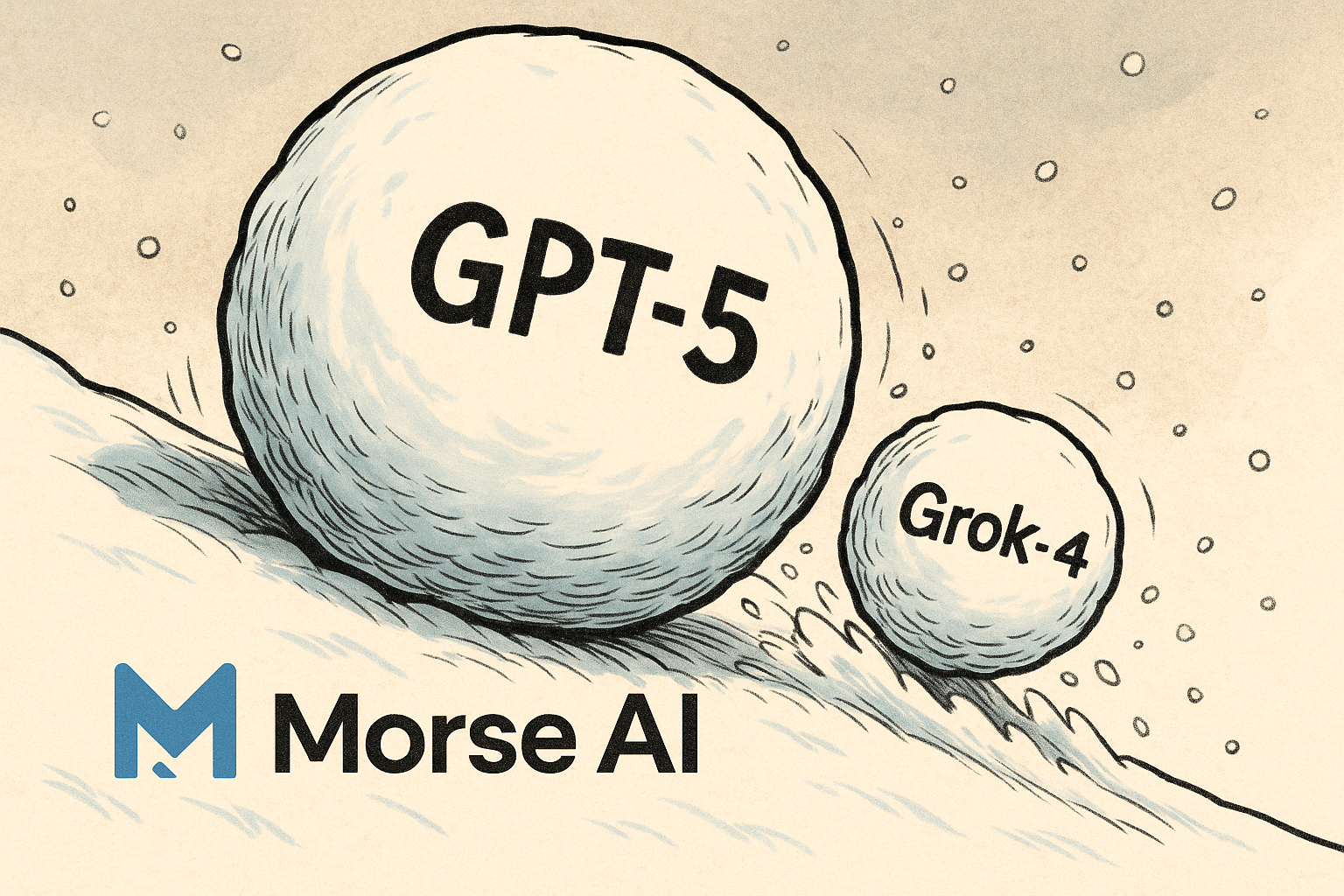
Optivi AI Now Supports GPT-5 and the Future of Advanced AI Models
Big news: as of August 2025, Optivi AI officially supports OpenAI’s groundbreaking GPT‑5 alongside a curated suite of the latest AI models. This move underscores our dedication to pushing AI boundaries and empowers our users with unmatched capabilities.
RIP Cookies. Hello Context
Once upon a time, you could follow your customer across the internet with a digital trail of crumbs. Retargeting ads, third-party cookies, pixel tracking — all part of the surveillance-fueled marketing machine we’ve depended on for decades. That era is ending. Good riddance.
Prompt Engineering & AI Interfaces: The New Art of Being Understood by Machines
In a world shifting from search-and-click to ask-and-act, how you talk to machines determines how they talk about you. As GenAI agents take over the frontlines of discovery and decision-making, prompt engineering has quietly become the most important design layer in the AI ecosystem. It’s no longer just about what your content says—it’s about how it gets interpreted, ranked, and presented by language models.
The Future of Digital Marketing Is Prompt-Driven
Digital marketing has always been about being seen at the right time, in the right place, by the right person. For years, that meant optimizing for Google search, placing programmatic ads, or riding viral social trends. But the rules have changed.
Visibility Isn’t Luck. It’s Engineered
Once upon a time, you could follow your customer across the internet with a digital trail of crumbs. Retargeting ads, third-party cookies, pixel tracking — all part of the surveillance-fueled marketing machine we’ve depended on for decades.
Why Brands Are Losing Visibility in the Age of AI Answers
We’re witnessing a major shift—one that’s reshaping how consumers discover products, and how brands get noticed. AI-powered tools like ChatGPT, Gemini, and Claude are redefining the way people search, decide, and act. Instead of scrolling through search results, users now get instant, conversational answers. This shift from click-based discovery to zero-click AI responses has massive implications for brand visibility.